Salt-based water softeners remove hardness minerals through ion exchange, while salt-free systems help reduce scale buildup without actually softening the water. The right option depends on your Tampa home’s water hardness levels, maintenance preferences, and overall water treatment goals.
Choosing between salt-based and salt-free water softeners can feel overwhelming for Tampa homeowners dealing with hard water issues. Mineral-heavy water can impact everything from appliance efficiency to cleaning performance, making it important to select a system designed for your home’s specific water conditions.
Hard water contains elevated levels of calcium and magnesium that can leave behind buildup inside pipes, water heaters, fixtures, and appliances. Over time, this buildup may reduce efficiency, increase maintenance needs, and shorten the lifespan of household plumbing systems.
Both salt-based and salt-free systems offer benefits, but they work very differently. Understanding how each option functions can help you make a more informed decision about protecting your home and improving your water quality.
What Is the Difference Between Salt-Based and Salt-Free Water Softeners?
The biggest difference is that salt-based systems remove hardness minerals from water, while salt-free systems condition minerals to reduce scale buildup.
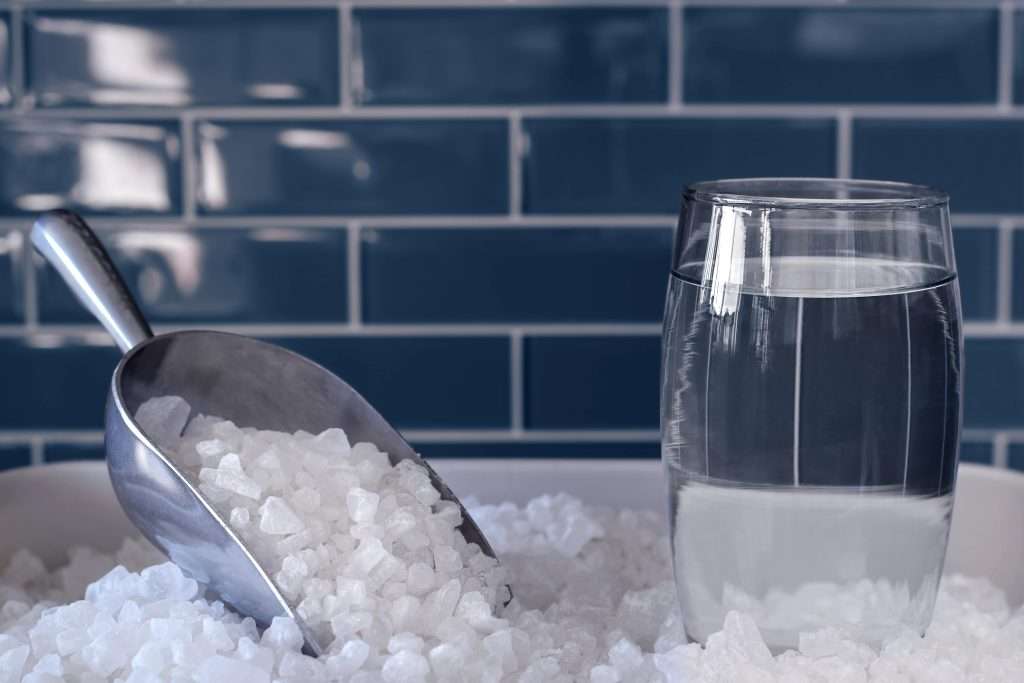
Salt-based water softeners use a process called ion exchange. During this process, calcium and magnesium minerals are removed and replaced with sodium ions. This creates softened water that helps reduce mineral buildup throughout the home.
Salt-free systems work differently. Instead of removing hardness minerals, they alter the structure of the minerals so they are less likely to stick to plumbing fixtures, appliances, and pipes.
For Tampa homeowners with moderate to severe hard water, understanding this distinction is important because the performance and maintenance requirements of each system can vary significantly.
How Do Salt-Based Water Softeners Work?
Salt-based water softeners work by removing hardness minerals through ion exchange.
Inside the system, resin beads attract calcium and magnesium ions as hard water passes through the tank. At the same time, sodium ions are released into the water in exchange for those hardness minerals.
This process helps prevent scale buildup inside plumbing systems and appliances while improving how water interacts with soaps and detergents.
According to Ecowater Central Florida’s guide on choosing the best water softener, salt-based systems remain one of the most effective solutions for homes with high hardness levels.
Because they physically remove hardness minerals, salt-based systems are often recommended for homes experiencing severe scale buildup or reduced appliance efficiency.
- Removes calcium and magnesium from water
- Reduces scale buildup in plumbing systems
- Improves soap and detergent performance
- Helps water heaters operate more efficiently
- May extend appliance lifespan
How Do Salt-Free Water Conditioners Work?
Salt-free water conditioners help reduce scale buildup by changing the structure of hardness minerals rather than removing them from the water.
These systems use a conditioning process that helps prevent minerals from attaching to surfaces throughout the home. While the minerals remain in the water, they are less likely to create stubborn scale deposits inside pipes and appliances.
Many homeowners prefer salt-free systems because they require less maintenance and do not require regular salt refills.
Salt-free conditioners are often viewed as a more environmentally friendly option because they do not produce wastewater during regeneration cycles.
Salt-free systems do not technically soften water because they do not remove calcium or magnesium. Homes with very hard water may still experience some hardness-related effects even after installation.
Which System Is Better for Tampa Homes?
The best system for your Tampa home depends on your water hardness levels, household water usage, and maintenance preferences.
Tampa-area water often contains elevated mineral content that contributes to scale buildup and appliance wear over time. Homes experiencing severe hard water problems generally benefit more from salt-based systems because they fully remove hardness minerals.
Salt-free systems may work well for homeowners who want lower maintenance requirements and moderate scale reduction without using salt.
Factors such as household size, plumbing age, appliance usage, and long-term maintenance expectations should all play a role when selecting a system.
If you are unsure which option is best, scheduling a professional water test can help identify your home’s exact hardness levels and treatment needs.
- Severity of water hardness
- Household water usage
- Maintenance preferences
- Environmental considerations
- Budget and long-term operating costs
- Existing plumbing and appliance condition
Do Salt-Free Systems Improve Water Taste?
Salt-free systems do not significantly impact water taste because they are designed to address scale buildup rather than contaminants or odors.
In most cases, water taste is more heavily influenced by chlorine, sulfur compounds, sediment, or other contaminants present in the water supply.
For homeowners focused on drinking water quality, additional treatment systems such as reverse osmosis or whole-home filtration may provide better results.
Learning more about water filtration options can help homeowners create a more complete water treatment solution tailored to their household needs.
Why Professional Water Testing Matters
Professional water testing helps homeowners identify the exact hardness levels and water quality concerns affecting their home.
No two Tampa homes have identical water conditions. Factors such as municipal water sources, plumbing age, and household usage can all influence the effectiveness of a treatment system.
Testing provides valuable information that helps determine whether a salt-based softener or salt-free conditioner is the better long-term solution.
Working with a local water treatment professional also helps homeowners better understand maintenance requirements, system sizing, and potential filtration upgrades.
For homeowners ready to evaluate their water conditions, Ecowater Central Florida offers professional water testing solutions designed to identify hardness and other common water quality issues.
Salt-Based vs. Salt-Free Water Softener FAQs
Do salt-free water conditioners remove hardness minerals?
Are salt-based water softeners better for very hard water?
Do salt-based softeners require maintenance?
Can salt-free systems reduce scale buildup?
Should Tampa homeowners schedule professional water testing?
Find the Right Water Softening Solution for Your Home
Choosing between a salt-based water softener and a salt-free conditioner ultimately comes down to your home’s water conditions and long-term goals. While salt-based systems provide more complete hardness removal, salt-free systems offer a lower-maintenance alternative for reducing scale buildup.
Understanding your water quality is the first step toward protecting your plumbing system, improving appliance efficiency, and creating a more comfortable home environment.
If you are ready to determine which solution is best for your Tampa home, scheduling a professional water consultation can help you make a more informed decision based on your household’s specific needs.