Tampa’s water pH influences how plumbing, appliances, and skin respond to everyday use. Testing your home’s water regularly helps you understand whether it leans acidic, neutral, or basic—so you can protect pipes, reduce buildup, and improve comfort. Professional testing and treatment tailored to Tampa’s variable water sources provide the most dependable path to balanced, high-quality water.
pH Water Basics for Tampa Homes: Setting the Stage for Smarter Water Chemistry
Understanding pH water is one of the simplest ways to get a clearer picture of what’s happening inside your home’s plumbing and appliances. In Tampa, where humidity, rainfall, and blended water sources can influence overall chemistry, pH helps explain why your showers feel a certain way, why fixtures spot up, and why some homes experience corrosion or scale faster than others.
The pH scale measures how acidic or basic water is. When water is too acidic, it can be more reactive with certain metals. When it’s too basic, it can contribute to mineral buildup—especially if hardness is also high. While “perfect” water doesn’t exist in nature, many drinking water resources reference a commonly recommended pH range of 6.5–8.5 for household water to help reduce nuisance issues like corrosion or scaling.
The most reliable way to understand your home’s pH (and the traits that influence it) is testing—not guessing. A practical place to start is a free water test kit, which can help you identify your baseline and decide whether adjustments make sense for comfort, plumbing protection, or taste.
The pH Scale Explained: Reading Water Chemistry Without the Jargon
The pH scale runs from 0 to 14. A reading below 7 is acidic, 7 is neutral, and above 7 is basic (often called alkaline). pH is only one piece of the bigger water chemistry picture, but it’s a helpful “headline metric” because it influences how water interacts with surfaces throughout your home.
Low pH (acidic) water can be more aggressive with metal plumbing and may contribute to issues like pinhole leaks over time or blue-green staining if copper is present. Higher pH (basic) water, especially when paired with hardness minerals like calcium and magnesium, may contribute to scale on fixtures, cloudy spotting on glass, and reduced efficiency in water-using appliances.
Another common metric you’ll see is TDS (total dissolved solids). pH measures acidity/alkalinity, while TDS measures how much “stuff” is dissolved in the water (minerals, salts, etc.). They’re related, but not interchangeable. If you want to understand what TDS means (and what it doesn’t), this overview of TDS in water helps explain how dissolved solids connect to taste, spotting, and appliance performance.
Tampa Water Quality: How Source, Season, and Treatment Shape pH
Tampa water quality is shaped by both natural conditions and how water is treated and managed for distribution. When a region blends multiple sources, the mineral makeup can vary—sometimes subtly, sometimes more noticeably—based on seasonal rainfall, drought cycles, and operational changes.
Even if municipal water is treated to remain stable, small shifts can still occur at the household level due to plumbing materials, home water heaters, and how long water sits in pipes. Private wells can experience wider swings because well chemistry reflects local geology more directly.
Many homeowners also track broader chemistry topics beyond pH—especially when they’re thinking about filtration or drinking-water-only systems. If you’re comparing options for at-the-tap purification, this article on how to remove PFAS from water is a useful reference point for how certain technologies are positioned for emerging contaminant concerns (even though PFAS isn’t what determines pH).
- The pH scale runs from 0–14; below 7 is acidic, 7 is neutral, and above 7 is basic.
- Many household water resources reference a recommended pH range of about 6.5–8.5 to help reduce nuisance issues like corrosion or scaling.
- Low pH can contribute to corrosion in some plumbing setups; high pH plus hardness can contribute to scale.
- TDS and pH are different measurements—TDS describes dissolved solids, while pH describes acidity/alkalinity.
- Testing is the fastest way to confirm what your home is dealing with before choosing treatment.
Household Clues: When pH May Be Out of Balance
pH-related issues often show up as patterns around the home. Acidic water may contribute to corrosion symptoms, including metallic taste, frequent pinhole leaks, or blue-green staining (especially where copper is present). Higher pH, combined with hardness minerals, may result in scale buildup, cloudy glass, or stubborn residue on fixtures.
It’s also important to separate pH concerns from other water chemistry issues. For example, sulfur-related odors (“rotten egg” smell) are typically tied to hydrogen sulfide—different cause, different fix. Likewise, rust-colored staining is often associated with iron, and treatment strategies vary based on test results and the form of iron present.
These surface clues are helpful, but they’re not definitive. Testing confirms whether pH is truly the driver—or whether hardness, iron, disinfectants, or other factors are doing the heavy lifting.
Testing pH the Right Way: Tools, Methods, and What Results Mean
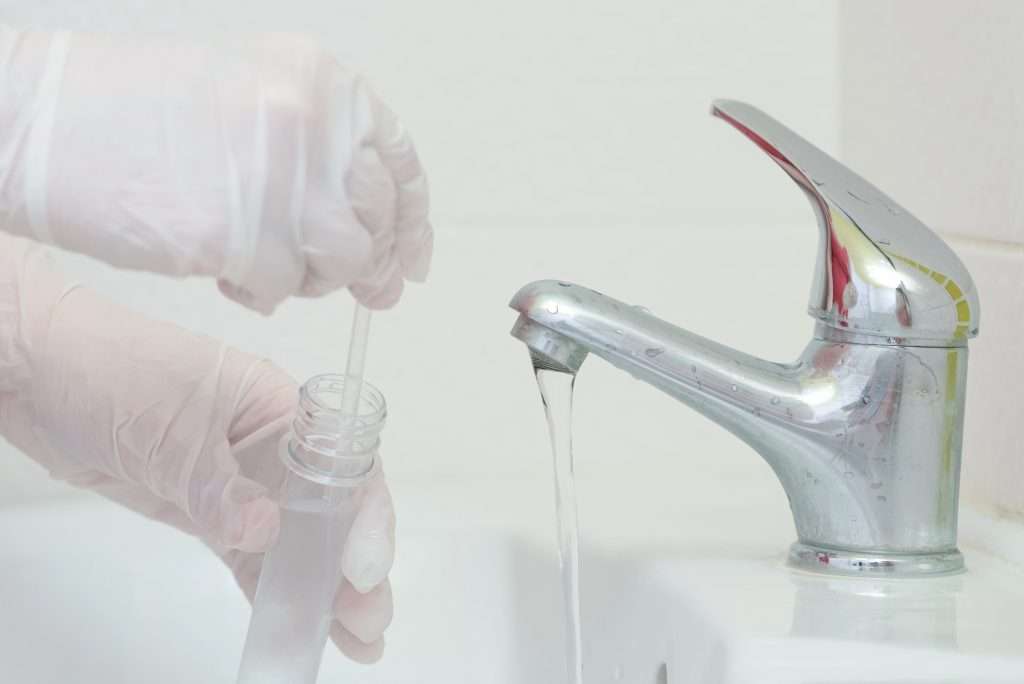
For a quick check, pH test strips can give a rough reading. Digital meters typically provide more precise numbers, but they still require proper calibration to be accurate. If you’re making treatment decisions—especially whole-home decisions—professional testing is often worth it because it captures pH alongside hardness, alkalinity, and other important traits that influence corrosion or scaling.
Because no two homes have identical plumbing materials or usage patterns, testing at the right tap and time matters. Results obtained after water sits overnight may differ from those after a short flush. A professional can help interpret these differences and connect results to a practical plan.
Solutions to Balance pH: Point-of-Use vs. Whole-Home Options
Once you know your pH, the right solution depends on your goal.
- Protecting pipes and fixtures: If low pH is contributing to corrosion risk, a whole-home (point-of-entry) neutralizing approach may be appropriate—often using media that raises pH gradually as water flows through.
- Improving drinking water experience: Point-of-use systems (like under-sink filtration) focus on taste and purity at the tap you use most for cooking and drinking.
Reverse osmosis (RO) is often used as a point-of-use solution for drinking water. Because RO water can read slightly lower in pH due to dissolved gases and low buffering minerals, some households add remineralization to improve taste and balance. If you’re comparing a modern under-sink approach, this tankless RO system example is a good reference for how compact RO setups can fit into everyday kitchen routines.
Where pH Meets Other Traits: Hardness, Scale, and Everyday Enjoyability
pH and hardness often interact in ways that affect daily comfort and cleaning. Higher pH combined with hardness minerals can encourage scale buildup, while lower pH can be more reactive with certain metals. Neither of these is automatically a “danger” signal—but both can create annoying home maintenance patterns and shorten appliance life if left unchecked.
Hardness is addressed with softening (or conditioning) strategies, and those strategies generally do not “fix” pH on their own. That’s why a right-sized plan often starts with testing, then decides whether you need pH correction, hardness management, drinking-water-only purification, or a combination.
Tampa pH and Water Chemistry FAQ
What is a normal pH range for household water?
Many household water resources reference a typical target range of about 6.5–8.5. Staying in that zone can help reduce nuisance issues such as corrosion (often associated with lower pH) and scale formation (often associated with higher pH and hardness).
Does slightly lower pH in RO water mean it’s unsafe?
Not necessarily. RO water can measure slightly below neutral because it has fewer minerals and can absorb dissolved gases. That pH reading doesn’t automatically indicate contamination. If taste preference is the issue, a remineralization stage may help.
How often should Tampa homeowners test pH?
Testing once or twice per year is a common cadence for tracking changes, and it’s especially useful after major plumbing updates, system installs, or noticeable shifts in taste, staining, or appliance performance.
Do water softeners change pH?
Softening is primarily designed to address hardness minerals (calcium and magnesium). It can improve scale-related symptoms, but it does not typically “solve” an out-of-range pH issue by itself.
Your Next Step: Check Your pH, Understand Your Chemistry, Choose What Fits
pH is a simple measurement that can explain a lot—how your water treats pipes, how it feels on skin, and why it behaves a certain way around fixtures and appliances. The smartest path is always: test first, then match treatment to what you learn. If you want help confirming your home’s pH and building a plan that fits Tampa’s local conditions, you can contact the Ecowater Central Florida team to request a water chemistry evaluation and discuss right-sized options for your home.