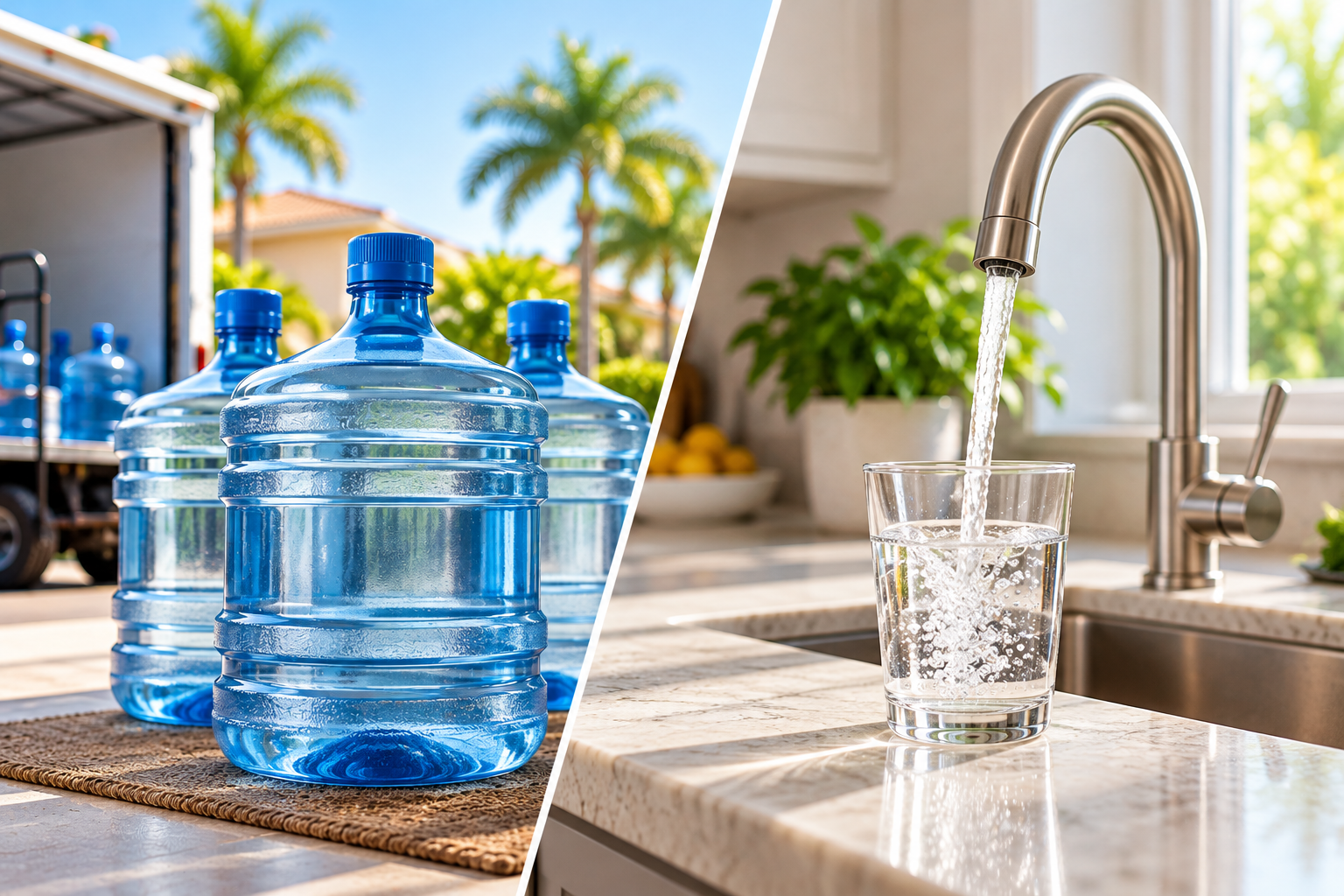
Reverse osmosis systems give Tampa homeowners a reliable way to improve drinking water quality at the tap by reducing contaminants that affect taste, clarity, and confidence. When properly selected for local water conditions, RO systems can significantly reduce substances like chlorine byproducts, PFAS, arsenic, and total dissolved solids—making water better for drinking and cooking without relying on bottled water.
If you live in the Tampa Bay area, chances are you’ve noticed something about your tap water that doesn’t feel quite right. Maybe it’s a strong chlorine taste, cloudy ice cubes, water that leaves residue in glasses, or just a lingering question about what’s actually coming out of the faucet.
We work with homeowners throughout Hillsborough, Pinellas, Pasco, Hernando, and Polk counties, and those concerns come up every day. Tampa’s water supply meets federal safety standards, but “safe” doesn’t always mean enjoyable to drink—or reassuring for families who care about long-term water quality.
That’s why more residents are searching for reverse osmosis water near me. They’re not chasing perfection; they’re looking for clarity, consistency, and a better drinking water experience at home. Whether you’re considering residential RO systems or just beginning research about water filtration, it pays to understand how these systems work and what problems they solve.
Tampa’s municipal water is sourced primarily from surface water systems, including reservoirs and rivers that are influenced by rainfall, seasonal demand, and surrounding land use. Treatment facilities do a thorough job of making that water safe, but the final water delivered to homes can still carry disinfectant residuals, byproducts, and trace contaminants that affect taste and odor.
According to data summarized by the Environmental Working Group for the Tampa water system, regulated and unregulated substances may be detected at varying levels throughout the year. These findings don’t necessarily indicate a health emergency, but they do explain why many homeowners prefer an added layer of filtration for drinking and cooking water.
Reverse osmosis has become a popular solution because it addresses those concerns directly at the point of use. Instead of treating every drop of water in the home, RO systems focus on the water you actually consume—delivering cleaner, better-tasting water straight from the kitchen tap.
In this guide, we’ll walk through how reverse osmosis systems work, why they’re especially relevant for Tampa water quality, what they can and can’t do, and how to decide whether an RO system makes sense for your home.
How Reverse Osmosis Works and Why It’s So Effective
Reverse osmosis works by separating contaminants from water at a molecular level. Instead of masking taste or simply trapping large particles, an RO system applies pressure to push water through a semi-permeable membrane that allows clean water molecules through while rejecting many dissolved substances.
In a typical residential system, the process begins with pre-filtration. These initial filters are designed to remove sediment and disinfectants like chlorine before the water reaches the membrane. This step is critical—not only for improving water quality, but also for protecting the membrane itself and extending system life.
The membrane is the core of the system. It is engineered to reduce a wide range of dissolved contaminants, including heavy metals, nitrates, sodium, and persistent chemicals such as PFAS. This separation process is what sets reverse osmosis apart from basic carbon filtration and is why it’s often recommended when homeowners are concerned about more than just taste. For more details on the science of this process, see how reverse osmosis works in our educational blog.
After passing through the membrane, the treated water is stored in a small pressurized tank so it’s available on demand. A final polishing filter refines the water just before it reaches your faucet, helping ensure clean taste and consistency every time you pour a glass.
This multi-stage approach is why reverse osmosis is recognized as one of the most thorough point-of-use filtration methods available today. According to guidance from the Environmental Working Group, RO systems are especially effective when homeowners want to reduce dissolved contaminants that other filtration methods may not address.
Research from the Water Quality Association further supports this effectiveness, noting that properly maintained reverse osmosis systems can reduce up to 99% of certain dissolved impurities. That level of performance is one reason RO systems are commonly used not only in homes, but also in medical, laboratory, and food-service applications.
For Tampa homeowners, this matters because local water conditions can vary by season, source blending, and neighborhood infrastructure. Reverse osmosis doesn’t rely on assumptions about water quality—it treats what’s actually present, delivering consistent results even when municipal water characteristics change.
The Reality of Tampa Water Quality and Why It Matters at the Tap
“Safe” Water Doesn’t Always Mean Ideal Water
Tampa’s drinking water meets federal safety standards, but “safe” does not always mean consistent, great-tasting, or ideal for every household. Like many Florida cities, Tampa relies on a combination of surface water sources that are treated, disinfected, and distributed across a wide service area. Along the way, water characteristics can change based on seasonal conditions, infrastructure, and source blending.
According to publicly available data reviewed by the Environmental Working Group’s Tampa water system profile, treated water in the area may contain trace levels of disinfectant byproducts, industrial compounds, and naturally occurring minerals. While these levels typically fall within regulatory limits, they can still affect taste, odor, and overall drinking experience.
Why Chlorine Taste and Odor Are So Common
One of the most common complaints we hear from Tampa homeowners is a strong chlorine taste or smell. Chlorine and chloramine are used to disinfect municipal water and protect it as it travels through miles of distribution piping. While effective for public health, these disinfectants often leave water tasting harsh or chemical at the tap—especially when used for drinking, coffee, or cooking.
PFAS and Other Emerging Contaminant Concerns
Another concern that has drawn increasing attention across Florida is the presence of PFAS, sometimes referred to as “forever chemicals.” These compounds persist in the environment and are difficult to remove through standard municipal treatment alone. Independent research summarized by the Environmental Working Group shows that reverse osmosis is among the most effective residential filtration methods for reducing PFAS exposure at the point of use.
How Total Dissolved Solids Affect Taste and Performance
Total dissolved solids (TDS) also play a role in how Tampa water behaves. TDS is a measurement of dissolved minerals, salts, and organic material. Elevated TDS doesn’t necessarily indicate unsafe water, but it can influence taste, scaling, and appliance performance. Many homeowners notice metallic, salty, or flat-tasting water when TDS levels fluctuate—particularly during seasonal changes or periods of heavy rainfall.
Because water quality can vary by neighborhood, plumbing age, and water source, two homes on the same street may experience very different results at the tap. This variability is a major reason Tampa residents often search for “reverse osmosis water near me” when basic filters fail to deliver consistent improvements.
Reverse osmosis systems address these issues at the point where water is actually consumed. Rather than relying on citywide averages or assumptions, RO systems treat water based on what is present at your tap—reducing chlorine byproducts, dissolved solids, and trace contaminants that affect taste and confidence in drinking water.
For homeowners who want greater control over what they drink—without replacing all their plumbing or relying on bottled water—reverse osmosis offers a practical, targeted solution that fits Tampa’s water profile and modern household needs.
What a Reverse Osmosis System Can — and Can’t — Do
Reverse osmosis systems are designed to solve a very specific problem: improving the quality of the water you drink and cook with. They do this exceptionally well by removing dissolved contaminants that affect taste, odor, and confidence at the tap. For Tampa homeowners, this often includes chlorine byproducts, PFAS, nitrates, sodium, and other dissolved solids that pass through standard carbon filters.
RO systems work at a molecular level. Using a semi-permeable membrane, they separate water molecules from unwanted substances, producing clean, low-TDS water at a dedicated faucet. Research from the Water Quality Association confirms that properly maintained RO systems can reduce up to 99% of certain dissolved contaminants, making them one of the most effective point-of-use filtration options available.
However, reverse osmosis is not designed to solve every water issue on its own. It does not soften water or treat the full volume of water entering the home. Minerals like calcium and magnesium—responsible for hard water scale—require a separate softening process. Likewise, sediment or sulfur odors may require pre-filtration to protect the RO membrane and ensure long-term performance. For more on broader water quality issues that may require additional treatment, see Tampa water problems.
For this reason, many Tampa homeowners use RO systems as part of a layered approach. A water softener may handle hardness throughout the home, while reverse osmosis provides highly purified water where it matters most—at the kitchen sink and refrigerator. This combination protects appliances, improves bathing comfort, and ensures clean, great-tasting drinking water without over-treating every tap.
It’s also important to understand that RO systems remove minerals along with contaminants. While this improves taste for many people, some homeowners choose to add a remineralization stage to restore small amounts of calcium or magnesium for flavor balance. This is a preference-based decision rather than a requirement, and it depends entirely on household goals.
Is Reverse Osmosis the Right Choice for Your Tampa Home?
When Reverse Osmosis Makes the Most Sense
Reverse osmosis is often a strong fit for Tampa homes connected to municipal water, especially when chlorine taste, PFAS concerns, or inconsistent water quality are present. Homeowners who cook frequently, drink water directly from the tap, or want to reduce bottled water use typically see the greatest benefit from RO filtration.
Because reverse osmosis targets dissolved contaminants that affect taste and confidence, it’s particularly effective for improving drinking and cooking water without treating every tap in the home. If you’re comparing technologies, our guide to understanding water contaminants explains how different filtration methods address different water quality issues.
Why Water Testing Should Come First
The most reliable way to determine whether reverse osmosis is the right solution is through testing. A professional water analysis identifies what’s actually present in your tap water and whether RO alone—or RO combined with other treatment—is the most practical approach.
Testing helps homeowners avoid over-buying equipment and ensures the system is designed around real water conditions rather than assumptions. Starting with a free water testing appointment provides clarity about contaminants, dissolved solids, and disinfectant byproducts so the solution fits your home—not the other way around.
How RO Compares to Other Water Filtration Systems
For homeowners weighing different water filtration systems, it’s important to understand the role reverse osmosis plays. Basic carbon filters improve taste and reduce chlorine, but they do not consistently address dissolved solids or emerging contaminants at the same level.
Reverse osmosis fills that gap by providing high-performance, point-of-use filtration where water is actually consumed. This targeted approach makes RO an efficient option for households that want meaningful improvements in drinking water quality without committing to whole-home treatment.
The U.S. Environmental Protection Agency emphasizes that point-of-use reverse osmosis systems are most effective when they are correctly sized, properly installed, and used for their intended purpose. When applied this way, RO systems offer an efficient and reliable way to improve drinking water quality at the tap.
Under-Sink vs. Whole-House Reverse Osmosis Systems
When Tampa homeowners search for reverse osmosis water near me, they often encounter two very different system types: under-sink reverse osmosis systems and whole-house reverse osmosis systems. While both use the same core technology, they are designed for very different situations—and understanding that distinction helps avoid over- or under-treating your water.
Why Under-Sink RO Is the Most Common Residential Choice
Under-sink reverse osmosis systems are by far the most common option in residential settings. These systems are installed at a single point—typically the kitchen sink—and provide highly purified water for drinking, cooking, and ice makers.
This approach makes sense for most Tampa homes because it targets the water you actually consume. Under-sink RO systems are efficient, cost-effective, and easier to maintain than larger systems, making them ideal for homeowners who want better-tasting water without treating every faucet in the house.
When a Whole-House RO System May Be Recommended
Whole-house reverse osmosis systems are not commonly used in typical residential settings, but there are specific situations where they may be appropriate. Homes dealing with unusually high total dissolved solids (TDS), certain well water conditions, or broader water quality challenges that extend beyond taste may benefit from a more comprehensive solution.
In these cases, a whole-house reverse osmosis system can provide purified water throughout the home—but only when it’s carefully designed. These systems require proper pre-treatment, larger storage capacity, and professional installation to manage flow rates, pressure, and water efficiency.
Whole-house reverse osmosis is typically recommended only after thorough water testing confirms conditions that justify it. For most Tampa homes, treating drinking and cooking water with an under-sink RO system delivers the best balance of performance, efficiency, and long-term practicality.
Why Proper Sizing and Local Expertise Matter
Reverse osmosis systems perform best when they’re matched to actual household demand and local water conditions. Oversizing a system can lead to unnecessary water waste and higher operating costs, while undersizing can result in pressure issues or inconsistent output.
Working with a provider familiar with Tampa-area water conditions helps ensure the right configuration from the start—whether that’s a straightforward under-sink system or, in select cases, a whole-house design built around specific water quality challenges.
System Maintenance: What Tampa Homeowners Should Expect
Reverse osmosis systems are not maintenance-free, but they are straightforward to care for when properly installed. Most systems rely on multiple filters to protect the RO membrane and maintain water quality. Pre-filters are typically replaced every 6–12 months, while the membrane itself can last several years depending on water conditions and household usage.
Signs that service may be needed include reduced water flow, changes in taste, or longer refill times at the RO faucet. Routine maintenance helps prevent these issues and ensures the system continues operating efficiently—especially important in areas with variable Tampa water quality.
Many homeowners choose to work with professionals who provide ongoing service through programs like local water testing and service support. Professional maintenance simplifies filter replacement, protects system components, and helps extend overall system lifespan.
According to guidance from the U.S. Environmental Protection Agency, proper installation and regular maintenance are key to reducing water waste and maintaining reverse osmosis efficiency. When these steps are followed, homeowners can enjoy reliable, high-quality drinking water year after year.
Local Experience Matters in the Tampa Bay Area
Water quality across the Tampa Bay region varies significantly by source, treatment process, and neighborhood infrastructure. Homes in Hillsborough, Pinellas, Pasco, Hernando, and Polk counties may experience different combinations of disinfectant byproducts, dissolved solids, and trace contaminants—even when served by the same utility.
That’s why local experience matters. At Ecowater Central Florida, we know how water is sourced, treated, and distributed, and this allows our systems to be designed around real conditions—not generic assumptions. This local knowledge helps ensure reverse osmosis systems are sized correctly, protected with proper pre-filtration, and maintained for long-term reliability.
Whether you live in Tampa, Brandon, Clearwater, Wesley Chapel, or surrounding communities, starting with accurate testing is the foundation of effective water treatment. A free water test provides clarity about what’s in your water and whether reverse osmosis is the right solution—or part of a broader treatment approach.
Frequently Asked Questions About Reverse Osmosis Systems in Tampa
Does a reverse osmosis system waste a lot of water?
How does reverse osmosis compare to pitcher or faucet filters?
Can an RO system connect to a refrigerator or ice maker?
Is reverse osmosis water safe for infants and pets?
Better Drinking Water Starts With Understanding Your Water
For Tampa homeowners, water quality concerns often begin with taste, odor, or uncertainty about what’s coming out of the tap. Reverse osmosis systems provide a proven way to improve drinking and cooking water by reducing dissolved contaminants that standard treatment processes don’t always eliminate.
What makes the biggest difference isn’t just the technology—it’s how the system is selected, sized, and supported. Tampa-area water conditions vary by neighborhood, source, and infrastructure, which is why local experience matters when choosing a reverse osmosis system.
At Ecowater Central Florida, we help homeowners across Hillsborough, Pinellas, Pasco, Hernando, and Polk counties make confident decisions about their water. We start with testing, explain results clearly, and recommend solutions based on real data—not assumptions.
If you want clear answers and guidance tailored to your home, schedule a free reverse osmosis consultation or start with a free water test. You’ll gain insight into your water quality and learn whether reverse osmosis is the right fit for your household—without pressure or guesswork.
Further Reading & References
The information in this guide is grounded in publicly available research and guidance from nationally recognized water quality and environmental health organizations. These resources provide additional technical context on reverse osmosis filtration and residential drinking water quality.
- Environmental Working Group – Tampa Drinking Water Data:EWG Tap Water Database – Tampa Water System
- Environmental Working Group – Reverse Osmosis Effectiveness: When Are Reverse Osmosis Water Filters a Good Choice?
- Water Quality Association – Reverse Osmosis Systems Overview:Reverse Osmosis Drinking Water Systems (WQA)
- U.S. Environmental Protection Agency – Point-of-Use RO Guidance: EPA WaterSense – Reverse Osmosis Systems