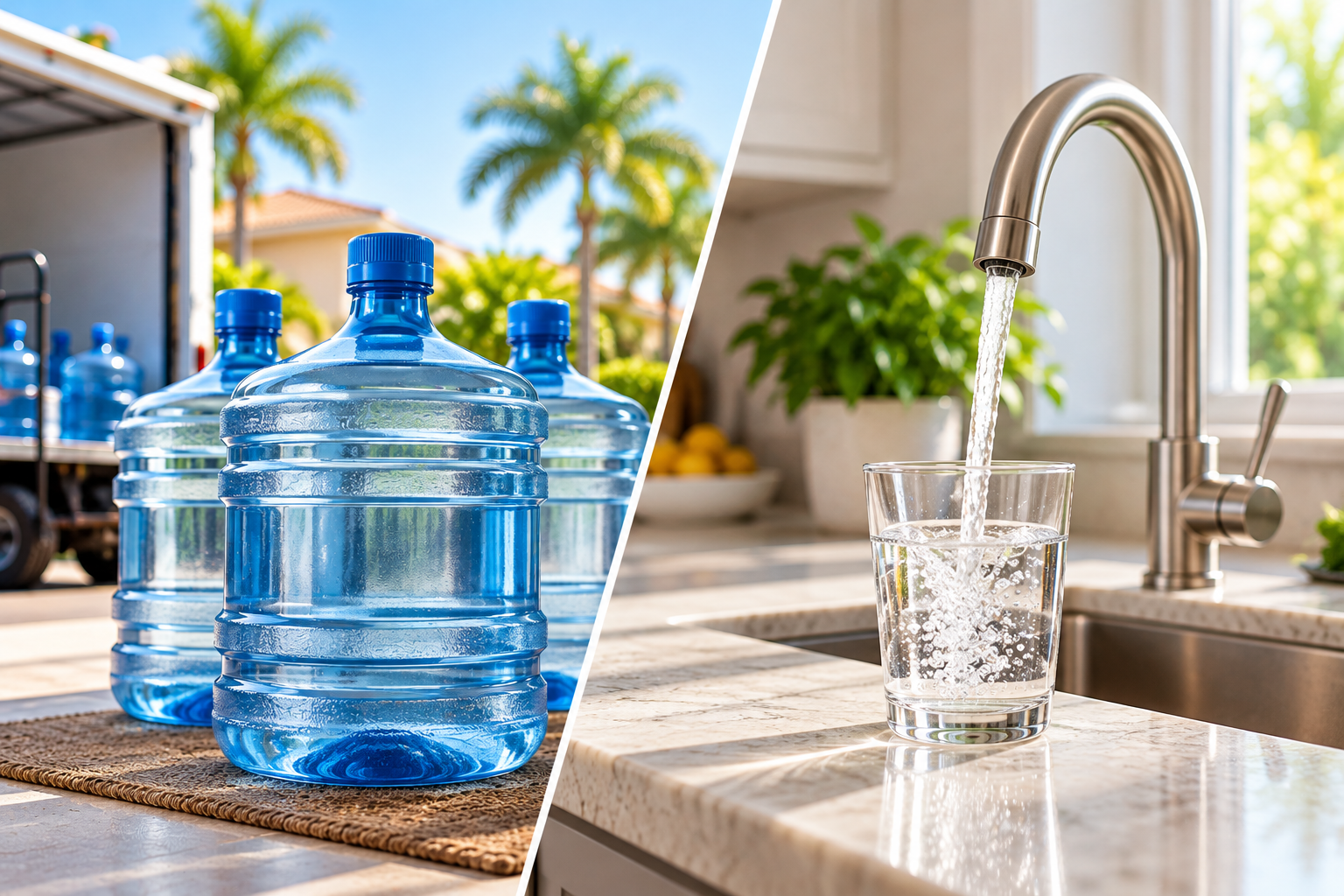
Key Takeaway: Single-use bottled water creates significant plastic waste and environmental strain. Reusable bottled water delivery can be a practical short-term solution for renters and small spaces, but the most sustainable long-term option for homeowners is a properly installed home drinking water system.
Across Tampa, Clearwater, Brandon, Riverview, and the surrounding Tampa Bay communities, more families are rethinking their relationship with bottled water. For some, bottled water delivery with large reusable jugs has been a convenient alternative to buying cases of single-use bottles. For others, bottled water still comes from grocery store shelves in disposable plastic packaging.
Both options solve one immediate concern — access to drinking water — but they don’t carry the same environmental weight. Understanding the difference between single-use bottled water, reusable bottle delivery, and home filtration helps households make decisions that fit both their space and their long-term sustainability goals.
How Does Bottled Water Impact the Environment?
Single-Use Bottles and Long-Term Plastic Pollution
When most people think about bottled water pollution, they picture single-use plastic bottles scattered in landfills, waterways, and along roadways. And that image isn’t exaggerated. Single-use retail bottles are one of the largest contributors to plastic waste worldwide, and once discarded, they can take hundreds of years to break down. Even then, they never truly disappear—those bottles simply fragment into microplastics that persist in soil, rivers, and oceans indefinitely.
The Hidden Water Waste Behind Every Plastic Bottle
What many people don’t realize is that the environmental impact begins long before a bottle ever reaches a store shelf or a delivery truck. According to findings from the Pacific Institute, it can take up to three liters of source water just to manufacture the plastic bottle needed to deliver a single liter of bottled water. That’s water lost before anyone even takes the first sip.
The Enormous Oil and Energy Footprint of Bottled Water
The energy cost is just as staggering. Industry data shows that producing bottled water consumes enormous amounts of fossil fuel. In fact, estimates consistently show that roughly 17 million barrels of oil are used each year in the United States alone to manufacture plastic bottles for bottled water—enough oil to fuel over one million cars for an entire year. And that figure doesn’t even include the fuel required to operate bottling plants, refrigeration systems, or nationwide transportation fleets.
The Energy Cost of Transportation and Global Distribution
Once filled, bottled water must then be shipped—often across state lines or even across the globe. Research published in Environmental Research Letters found that bottled water can require up to 2,000 times more energy per gallon than water produced and treated locally through municipal systems. That massive energy difference is driven largely by packaging, transportation, and refrigeration demands.
Reusable Bottle Delivery: A Step in the Right Direction
Bottled water delivery does improve on one part of this equation by using large, reusable plastic bottles instead of single-use retail packaging. These bottles are sanitized and refilled dozens of times before being recycled, which dramatically reduces the volume of throwaway plastic entering landfills. For renters, apartments, offices, and households where installing filtration equipment isn’t practical, reusable bottle delivery can be a far more responsible alternative to buying disposable bottles by the case.
Why Reuse Still Doesn’t Eliminate the Environmental Burden
However, even reusable bottled water delivery still relies on plastic manufacturing, repeated truck routes, fuel consumption, and continuous sanitizing cycles. The World Economic Forum now classifies plastic pollution as both an economic and ecological emergency, emphasizing that even well-intentioned reuse systems remain part of a much larger global plastic dependency problem.
The Environmental Advantage of Home Water Systems
The net result is this: while reusable bottle delivery is clearly more responsible than single-use bottled water, it still carries a far larger environmental footprint than producing water directly at home through a properly installed drinking water system. Home filtration eliminates the need for plastic packaging altogether and avoids the fuel, oil, and energy consumption required to move water from factory to warehouse to truck to home.
Is Bottled Water Actually Cleaner Than Tap Water?
One reason bottled water remains popular is the widespread assumption that it must be cleaner or safer than tap water. In reality, that assumption doesn’t always hold up. Investigations by the Environmental Working Group into bottled water quality found that multiple popular bottled water brands contained a wide range of chemical contaminants, many of which were not fully regulated at the time of testing.
Peer-reviewed research published in the journal Environmental Research has also confirmed that microplastics are commonly found in bottled water due to breakdown during storage and packaging. These particles are now present throughout the water cycle worldwide.
With bottled water, transparency is often limited. Consumers rarely have consistent access to detailed testing results, treatment methods, or source documentation. With a properly installed home drinking water system, homeowners can test their water directly, monitor performance, and understand exactly what is being removed.
Quick Facts About Bottled Water vs. Home Filtration
Single-use bottled water creates long-term plastic waste that can persist for centuries.
Reusable bottle delivery reduces single-use waste but still requires transportation and sanitizing energy.
Testing by the Environmental Working Group identified dozens of contaminants across major bottled water brands.
Microplastics have been detected in bottled water worldwide.
Home drinking water systems reduce plastic waste to near zero for daily hydration needs.
Why Home Water Filtration Is the Most Sustainable Long-Term Choice
Bottled water cooler delivery using large reusable bottles can be a smart short-term solution for renters, apartments, offices, and households where installing filtration equipment simply isn’t practical. It prevents reliance on disposable retail bottles and provides dependable access to drinking water.
For homeowners who do have the space and plumbing access, however, home filtration represents the most sustainable long-term solution. Producing water directly at the tap eliminates routine delivery routes, reduces fuel consumption, and nearly eliminates plastic waste from daily hydration.
Many Tampa Bay families make the transition naturally over time. Bottle delivery may work well during apartment living or short-term housing, but home filtration becomes the preferred option once homeowners settle into permanent residences.
Options range from under-sink reverse osmosis systems to full-scale whole-house filtration systems designed to address taste, odor, chlorine, sediment, and other local water concerns.
What Does Bottled Water Really Cost Over Time?
The monthly cost of bottled water delivery often seems manageable until homeowners add it up over several years. Between delivery fees, equipment rentals, and ongoing refills, many families spend thousands of dollars without realizing it.
The Beverage Industry Environmental Roundtable has documented how production, packaging, and transportation make bottled water one of the least efficient ways to supply drinking water.
Home systems involve an upfront investment, but routine costs are predictable and relatively small. Filter replacements and maintenance are often a fraction of what bottled water costs over the same timeframe. Even premium solutions like whole-house reverse osmosis systems frequently become the more economical choice over time.
Ecowater Central Florida: Serving Tampa Bay Communities
Homeowners across Tampa, St. Petersburg, Clearwater, Brandon, Riverview, Wesley Chapel, Plant City, Palm Harbor, Town n’ Country, Tarpon Springs, Trinity, and surrounding Tampa Bay communities all share similar water supply challenges tied to regional groundwater and municipal treatment. After decades of serving Florida households, Ecowater Central Florida regularly helps families decide whether bottled water delivery, home filtration, or a combination of both makes the most sense for their lifestyle and housing situation.
Frequently Asked Questions About Bottled Water & Home Water Systems
Is home-filtered water really as safe as bottled water?
Yes. When a home filtration system is properly selected, installed, and maintained, it can deliver water that is just as safe—and often more transparent—than bottled water. With home systems, you can test your own water, understand exactly what’s being removed, and monitor performance over time instead of relying on limited brand reporting.
Is bottled water delivery better for the environment than buying cases of bottled water?
Yes. Bottled water delivery uses large, reusable plastic bottles that are sanitized and refilled many times, which significantly reduces single-use plastic waste compared to store-bought bottled water. For renters, apartments, offices, and very small spaces, reusable bottle delivery can be a responsible short-term solution.
Does reusable bottled water delivery eliminate the environmental impact?
While reusable delivery greatly reduces throwaway plastic, it still requires plastic manufacturing, repeated truck transportation, fuel consumption, and energy-intensive sanitizing. It’s a meaningful improvement over single-use bottles—but it still carries a larger environmental footprint than producing drinking water directly at home.
Can reverse osmosis really remove microplastics from drinking water?
Yes. High-quality reverse osmosis systems use ultra-fine membranes capable of reducing microplastics, dissolved solids, and many microscopic contaminants. These systems are among the most effective residential solutions for producing clean, consistent drinking water.
Can a home filtration system completely replace bottled water delivery?
In most permanent homes, yes. Many homeowners completely stop using bottled water once the right home system is installed. However, bottled water delivery can still make sense for renters, short-term housing, or spaces where filtration equipment isn’t practical.
A Sustainable Shift That Starts at Home
Switching away from single-use bottled water is one of the simplest changes households can make to reduce waste and environmental strain. Reusable bottled water delivery offers a practical bridge for renters and tight spaces, while home filtration represents the most sustainable long-term destination for homeowners.
With today’s systems, clean water no longer depends on plastic packaging or recurring deliveries. Families gain clarity, consistency, and control — all while reducing their environmental footprint.
Ready to Switch to a More Sustainable Water Solution in Tampa Bay?
Whether your household currently relies on single-use bottled water, reusable bottle delivery, or basic faucet filtration, the most important step forward is understanding your options. Reusable bottled water delivery can be a practical short-term solution for renters and smaller spaces, but for permanent homes across Tampa Bay, a professionally installed home drinking water system remains the most sustainable, cost-effective, and environmentally responsible long-term choice.
With modern filtration technology, homeowners no longer have to choose between convenience and sustainability. You can enjoy clean, great-tasting water directly from your tap while dramatically reducing plastic waste, transportation emissions, and long-term costs.
Learn how you can switch to sustainable home water solutions — get started today. Connect with a local water expert at Ecowater Central Florida to explore the right drinking water system for your home, your water quality, and your long-term goals.
Further Reading & References
- Environmental Working Group – Bottled Water Quality Investigation
- Environmental Research – Microplastics in Bottled Water
- Environmental Research Letters – Energy Use of Bottled Water
- Beverage Industry Environmental Roundtable – Bottled Water Sustainability
- World Economic Forum – Plastic Pollution Emergency
- Pacific Institute – Bottled Water Fact Sheet