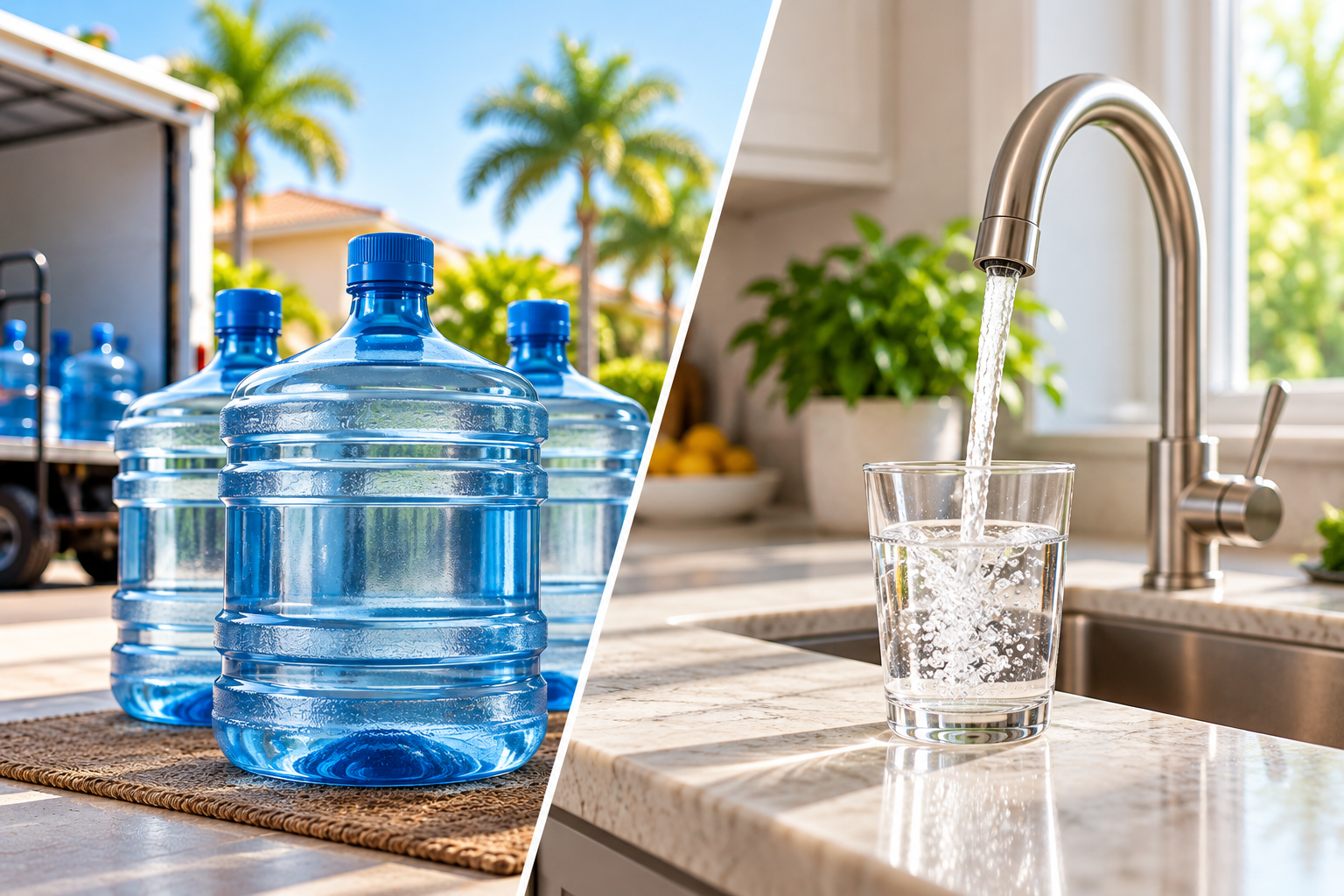
Choosing the right water purification method for your home can be overwhelming. At Ecowater Central Florida, we help Florida families cut through the confusion with clear, science-based insights. Whether you’re comparing reverse osmosis, distilled water, or purified water, we break down how each method works, what contaminants it targets, and which approach fits your household needs.
What Does Purified Water Mean?
Purified water is water that has been filtered or processed to remove impurities like chemicals, bacteria, and dissolved solids. According to Healthline, purified water must meet a strict contaminant limit—no more than 10 parts per million (ppm) of total dissolved solids. This makes it much cleaner than standard tap water, which can vary in quality based on local sources and treatment methods.
The purification process may involve reverse osmosis, distillation, or carbon filtration. While these methods differ in how they remove contaminants, all aim to produce cleaner, safer water for consumption. However, some processes also remove naturally occurring minerals like calcium and magnesium, which can affect taste and nutritional value.
Both reverse osmosis and distillation are purification methods, and the water they produce qualifies as purified water under most standards.
What is Reverse Osmosis and how does it work?
Reverse osmosis (RO) uses pressure to force tap water through a semi-permeable membrane, removing up to 99% of contaminants—including lead, arsenic, fluoride, and many PFAS (“forever chemicals”). It’s a point-of-use system (usually under the sink), delivering crisp, clean drinking water without the plastic waste and increasing cost of bottled alternatives.
According to a study by Pub Med Central published on the NIH website, RO has dominated the global water purification market since the 1980s due to its cost-effectiveness, reliability, and efficiency and it remains one of the most advanced and reliable technologies for water purification.
The initial filtration process does remove essential minerals, but most units can be equipped with a post filter that reintroduces essential electrolytes like potassium and magnesium into the water, creating great tasting, high-quality water that can be trusted for both drinking and cooking.
What Is Distilled Water and How Is It Made?
Distilled water is created through a process that mimics the Earth’s natural water cycle. The water is heated until it becomes steam, then condensed back into liquid form, leaving behind most dissolved minerals, heavy metals, and many organic compounds. This method can eliminate contaminants like lead, nitrate, and some bacteria.
However, distillation is not perfect. Some volatile organic compounds (VOCs) and chemicals with lower boiling points than water—such as certain pesticides or solvents—can evaporate and condense along with the steam, potentially remaining in the final product unless a post-filter is used.
Because the process also strips away beneficial minerals like calcium and magnesium, the result is water that may taste flat or bland. While distilled water is ideal for sensitive appliances like steam irons, humidifiers, or CPAP machines, it’s generally not recommended as your sole drinking source due to the lack of electrolytes and high energy demands of the process.
How Do Reverse Osmosis, Distilled, and Other Purified Waters Compare?
| Type | Treatment Method | Contaminants Removed | Pros | Cons |
|---|---|---|---|---|
| Reverse Osmosis | Multi-stage filtration with semipermeable membrane | Lead, arsenic, fluoride, PFAS, nitrates, some microbes | Excellent taste; broad contaminant removal; efficient for home use | Requires filter changes; some water waste; removes minerals (they can be reintroduced) |
| Distilled Water | Boiling and re-condensation | Minerals, metals, microbes, most organics | Extremely pure; no filter replacements needed | Flat taste; energy-intensive; removes healthy minerals; can leave behind VOCs and chemicals |
| Other Purified Water | Carbon filtration, UV, ozonation, or mixed methods | Chlorine, VOCs, some microbes, sediment | Widely available; improves taste and odor | May not remove all contaminants; varies by method |
What Does Tampa Bay Water Quality Look Like?
According to data analyzed by the Environmental Working Group (EWG), the water provided by the Tampa Water Department complies with federal drinking water standards—but still contains several contaminants detected above health guidelines. These include disinfection byproducts like haloacetic acids (HAA5 and HAA9), total trihalomethanes (TTHMs), and trace levels of PFAS chemicals.
While the water meets EPA legal limits, some of those limits haven’t been updated in decades and may not reflect the latest health research. As a result, many Tampa-area homeowners choose to add reverse osmosis or whole-home filtration to reduce long-term exposure to these potential risks and improve taste and odor.
Learn more about reverse osmosis solutions in Tampa or explore whole-home filtration options from Ecowater Central Florida.
🔍 Frequently Asked Questions
Which system removes PFAS and forever chemicals?
Reverse osmosis is proven to filter out most PFAS chemicals—one of the few home systems rated for that purpose.
Is distilled water safe to drink every day?
In a general sense, it is considered safe, but it can leave behind certain chemicals and VOCs. It also lacks minerals and can taste flat. Many use RO systems with a post filter instead.
How much water waste does RO create?
Modern RO units can recycle or reduce waste to nearly a 1:1 ratio, meaning nearly every gallon filtered becomes usable.
Which system is best for energy efficiency?
RO uses only pressure—no heating—making it much more energy-efficient than distillation.
Can purified bottled water vary in quality?
Yes—“purified” isn’t a guarantee of method. Always check the label or source to see if it uses RO, distillation, or carbon treatment.
Which Purification Method is Best for You?
If you’re after everyday drinking quality, especially for removing PFAS, lead, or nitrates—choose reverse osmosis.
Need help? Contact our experts for guidance on choosing the right purification system—we’ll recommend the best solution for your household’s water quality, health needs, and lifestyle.
Clean Water Solutions Backed by Local Expertise
Choosing between reverse osmosis, distilled, and other purified water options starts with understanding how each method works—and how it fits your household’s needs. At Ecowater Central Florida, we’ve been serving Central Florida families for over 40 years with advanced, NSF-certified solutions and a team that lives and works right here in the Tampa area.
Our team isn’t just knowledgeable, we’re neighbors. We understand the local water quality challenges better than anyone, and we’re proud to offer reverse osmosis systems, whole-home filtration, and expert service backed by the world’s oldest and most trusted water treatment brand.
Contact our local water experts today to get personalized recommendations that fit your water quality goals—and your Florida lifestyle.